World Cup Final Tactics: How Football’s Greatest Coaches Changed the Game
World Cup Final Tactics: How Football’s Greatest Coaches Changed the Game
There is a moment in every World Cup final — usually somewhere in the second half, when legs are heavy and the score is tight — where tactics stop being theoretical and become everything. The world cup final tactics that coaches spend months preparing come down to a substitution, a positional shift, or a single instruction whispered in a player’s ear during a stoppage in play.
For Malaysian football fans who’ve watched these finals from mamak stalls in Johor to living rooms in Kuala Lumpur, the drama on the pitch always looks spontaneous. But beneath every iconic moment is a plan — carefully built, obsessively rehearsed, and sometimes abandoned in real time when the match demands something different.
This is the story of how football’s greatest coaches approached the biggest game in the world, and how their world cup final tactics changed the sport forever.
More Than Just a Game Plan
Before we walk through the decades, it’s worth understanding why world cup final tactics carry so much weight. A domestic league manager has 38 matches to find his best system. A World Cup coach has seven. Every tactical decision is compressed, accelerated, and magnified by the stakes involved.
According to FIFA, 11 of the 22 World Cup finals held through 2022 were decided by a single goal. That margin — one moment, one positional error, one tactical read that was right or wrong — is the difference between a nation celebrating in the streets and a generation carrying quiet heartbreak. Understanding world cup final tactics means understanding how fine those margins truly are.
The world cup winning strategies that history remembers weren’t invented overnight. They were built across careers, refined through failure, and trusted when everything was on the line.
1966 — Alf Ramsey’s Wingless Revolution
England’s 1966 World Cup victory under Alf Ramsey remains one of the most tactically significant in the tournament’s history. Ramsey made a decision that shocked the football establishment: he removed the traditional wingers from his starting lineup entirely.
The “wingless wonders” formation — a flat 4–4–2 built around defensive discipline and work rate — was criticised before a ball was kicked. Pundits argued England were too cautious, too pragmatic, too reluctant to entertain. But Ramsey had studied his opponents carefully, and his world cup final tactics were built around a specific truth: in a knockout tournament, shape and organisation beat flair and improvisation more often than not.
England won 4–2. The world cup winning strategies Ramsey established — prioritising collective structure over individual brilliance — influenced English football for decades. For better and for worse, that philosophy runs through English football culture to this day, and it is part of football tactics history that coaching educators still reference worldwide.
1970 — Brazil and the Tactical Freedom That Wasn’t Accidental
Brazil’s 1970 World Cup campaign is remembered as the most beautiful football ever played. But what looks like pure freedom was built on deeply considered world cup final tactics — coach Mário Zagallo made a deliberate choice to give his attackers licence to express themselves within a structure designed to protect them.
The 4–2–4 system Brazil deployed was not reckless. It created positional overloads in dangerous areas, drew opponents out of shape, and then exploited the spaces left behind with devastating speed and precision. Carlos Alberto’s thundering fourth goal in the final against Italy — the culmination of a sweeping 10-pass team move — looked spontaneous. It was the result of hours of rehearsal and extraordinary tactical trust between players and coach.
Zagallo’s greatest insight in terms of world cup winning strategies was this: elite players don’t need to be controlled. They need to be believed in. Give them a framework they trust, and they will exceed it. That belief produced the most celebrated football tactics history has ever recorded.
Football Tactics History: The 1974 Collision of Two Philosophies
Few World Cup finals in history produced a more fascinating tactical collision than 1974’s meeting between the Netherlands and West Germany. This match is a landmark moment in football tactics history — two opposing philosophies arriving at football’s greatest stage at exactly the same time.
The Dutch, under Rinus Michels, played Total Football — a fluid system where every outfield player rotated freely between positions, pressing relentlessly and creating tactical chaos for opponents. It was revolutionary. It was also, on that day, beatable.
West Germany, under Helmut Schön, prepared specifically to exploit the gaps that Dutch fluidity sometimes left in behind their defensive line. When the Netherlands scored from a penalty before a German player had touched the ball, it looked like Germany’s world cup final tactics had already failed. Schön stayed calm. His half-time adjustments — pushing Franz Beckenbauer forward, compressing the Dutch space — gradually suffocated the Total Football system. Germany won 2–1.
UEFA has since documented this final extensively as a tactical masterclass in adaptation under pressure. It remains one of the most studied matches in football tactics history, taught in coaching courses across the world — including in Malaysian football development programmes inspired by European methodology.
1982 — Italy’s Patience as a World Cup Winning Strategy
Italy’s 1982 World Cup triumph under Enzo Bearzot is one of the most underappreciated tactical achievements in the tournament’s story. The Azzurri were booed by their own fans through the group stages after three draws. Critics called their football dull, negative, and unworthy of a great football nation.
Bearzot didn’t change his approach. His world cup final tactics were built around catenaccio-influenced defensive organisation — disciplined zonal marking, compact shape, and rapid counter-attacks designed to punish opponents the moment they overcommitted. It was a system built specifically for knockout football, where defensive solidity and clinical finishing matter more than possession statistics.
In one of the lesser-known chapters of football tactics history, Bearzot also made a decision that shaped the tournament psychologically: he stopped speaking to the Italian media entirely for weeks, protecting his players from external pressure and building a collective identity that proved unbreakable. Italy won the final against West Germany 3–1. The world cup winning strategies Bearzot employed were as much psychological as tactical — and that lesson remains relevant to every coach who has followed him.
1994 — When World Cup Winning Strategies Meet Human Unpredictability
Brazil’s 1994 title under Carlos Alberto Parreira was built on tactical pragmatism — a 4–4–2 built around defensive solidity and Romário’s lethal finishing up front. It was a long way from the attacking traditions Brazilian supporters expected, and it made for some uncomfortable watching. But it worked.
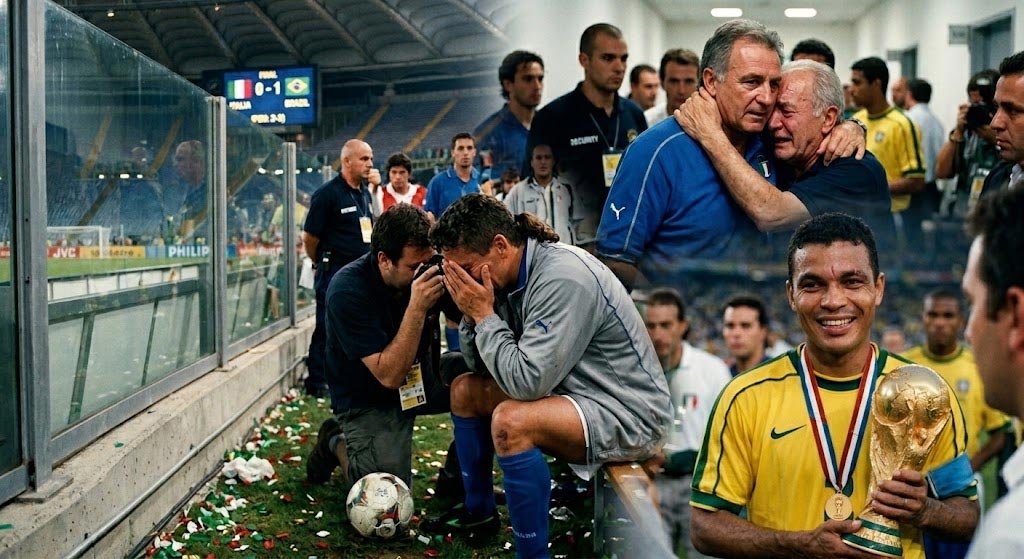
The most fascinating world cup final tactics story from 1994, though, wasn’t on the pitch. Brazil’s coaching staff had studied Italian penalty tendencies in detail. Goalkeeper Taffarel had been briefed on which direction key players preferred to shoot. When Roberto Baggio stepped up for the deciding kick, Taffarel had already made his choice.
He guessed wrong direction. Baggio still missed — high over the bar. Sometimes the most meticulous world cup winning strategies cannot account for the weight a human being carries into a single moment. That tension between preparation and unpredictability is what makes world cup final tactics endlessly fascinating, and why the game never fully belongs to the coaches who plan it.
For the full emotional story of what Baggio was carrying in those seconds, and what that night meant behind the scenes, read The Untold Stories Behind World Cup Finals: Players, Coaches and Tears.
2006 — Lippi’s Penalty Blueprint and Zidane’s Exit
Italy’s 2006 World Cup victory under Marcello Lippi produced two stories that belong in any discussion of world cup final tactics. The first was tactical: Lippi’s decision to deploy Andrea Pirlo in a deep-lying playmaker role against France was questioned by analysts before the match. Pirlo controlled the midfield throughout. Italy won on penalties.
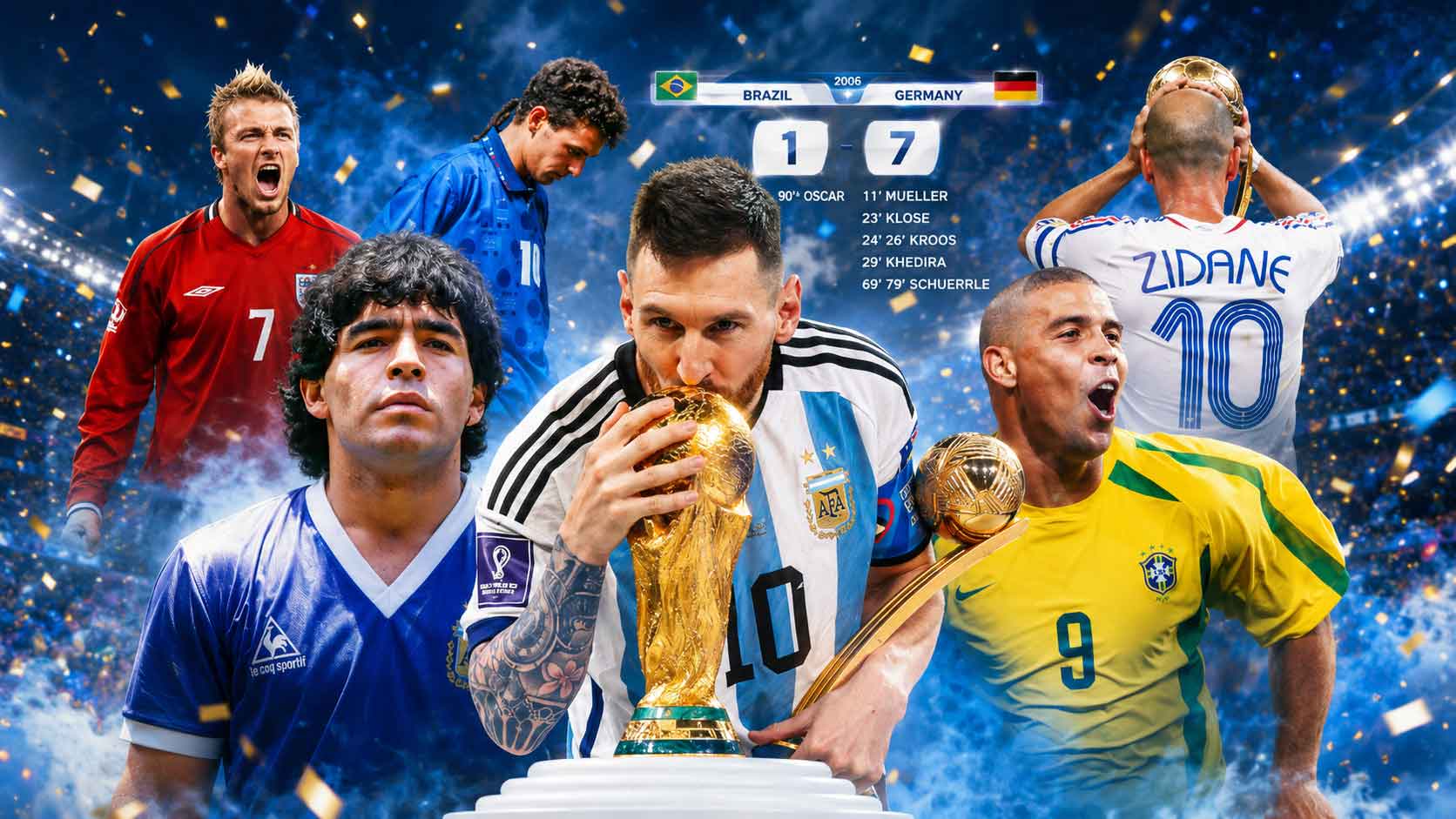
The second story is part of football tactics history for entirely different reasons. Zinedine Zidane — France’s greatest player, in his final professional match — headbutted Marco Materazzi in extra time and was sent off. No tactical plan accounts for that. France lost the shootout. And the image of Zidane walking past the World Cup trophy without touching it became one of football’s most haunting photographs.
What fewer people know is that Lippi had planned his penalty order days in advance — assigning each kick based on the psychological profile of his players, not just their technical ability. That level of world cup winning strategies preparation, invisible to the watching public, is the kind of detail that separates winning coaches from very good ones.
2010 — Tiki-Taka and the Blueprint That Travelled the World
Spain’s 2010 World Cup triumph under Vicente del Bosque represents perhaps the single greatest influence on modern football tactics history. Tiki-taka — built on relentless short passing, positional dominance, and the patient construction of attacking opportunities — didn’t just win a tournament. It reshaped how football was understood at every level of the game.
Against the Netherlands in Johannesburg, Spain’s world cup final tactics were tested severely — the Dutch were physical, aggressive, and deliberately targeted Spain’s technical players with late challenges. Spain absorbed it. They maintained their shape, their composure, and their passing rhythm until Iniesta’s 116th-minute winner broke Dutch resistance.
UEFA has extensively credited Spain’s 2010 approach as a blueprint that influenced national football programmes worldwide. The Football Association of Malaysia (FAM) incorporated elements of possession-based development into its youth coaching philosophy in the years that followed — a direct downstream effect of world cup winning strategies born in Spain and refined in South Africa.
2014 — Germany’s Decade-Long Tactical Project
Germany’s 2014 World Cup win under Joachim Löw was not the result of one brilliant coach’s idea. It was the visible outcome of a ten-year national football restructuring programme — arguably the most ambitious football tactics history has ever recorded at a national level.
Following Germany’s disappointing exit from Euro 2000, the German Football Association DFB mandated systematic changes across youth academies, coaching education, and playing philosophy. By 2014, the world cup final tactics Löw deployed — high pressing, positional flexibility, fluid transitions between defence and attack — were not ideas imposed on reluctant players. They were the natural expression of a generation raised on a single footballing language.
The 7–1 semi-final destruction of host nation Brazil remains one of the most startling results in football history — a product of pressing intensity and transition speed that Brazil’s more individually-focused world cup winning strategies simply couldn’t handle. The 1–0 final win over Argentina through Götze’s extra-time goal was quieter, but tactically it confirmed everything Germany had been building toward.
2022 — Scaloni vs Deschamps: Tactics at Their Most Human
The 2022 World Cup final produced what most observers now consider the greatest match ever played — and the tactical chess match beneath the drama was as compelling as the goals themselves.
Argentina coach Lionel Scaloni built his world cup final tactics around a compact 4–4–2 mid-block — defending deep, pressing in organised lines, and exploiting space on the counter through Messi and Julián Álvarez. For 80 minutes it worked perfectly. Argentina led 2–0 and France looked exhausted and out of ideas.
Then Didier Deschamps made the substitutions that changed everything. Bringing on Thuram and Camavinga shifted the game’s energy, and France’s higher defensive line suddenly began to find space in behind Argentina’s shape. Mbappé’s two goals in 97 seconds were not random explosions — they were the product of specific tactical adjustments that created specific vulnerabilities.
The final ended 3–3 after extra time. Penalties. Argentina held their nerve. Messi finally lifted the trophy that had eluded him his entire career. And the world breathed out together.
For the iconic moments that defined that final and the emotions behind them, read The Most Iconic World Cup Final Moments in History.
What Malaysian Fans Can Take From This
Understanding world cup final tactics changes how you watch football. When a team defends deep, you start asking whether it’s designed. When a substitution shifts momentum, you notice the logic behind it. When a coach stays calm at 2–0 down, you recognise that composure as its own tactical decision.
Malaysian football has its own tactical journey underway. The Football Association of Malaysia (FAM) continues to develop coaching education that draws from what World Cup-winning coaches have demonstrated across nine decades. The world cup winning strategies that worked in Berlin, Johannesburg, and Lusail leave traces — in youth academies in Petaling Jaya, in coaching seminars in Kuala Lumpur, and in the way young players in Johor are being taught to think about space and movement.
Every four years, the world’s greatest tactical minds gather. Every four years, football tactics history adds a new chapter. And every four years, a generation of Malaysian football fans watches those chapters being written — in real time, from mamak stools, with tea getting cold and everything else forgotten.
Final Thoughts
The goals are what we remember. But the world cup final tactics behind them are what shaped the game we have today. From Ramsey’s wingless formation to Scaloni’s mid-block, every coach who has stood in a World Cup final dugout has added something to the conversation — and that conversation never truly ends.
It just continues, four years at a time, on pitches that carry the weight of everything that came before.
That is how football thinks. That is how football grows.
More Latest Updates:
Related Posts

















About BC55 Casino

BC55 Official is Malaysia's first-rated online casino, offering a top-notch gaming experience with over 200 exciting online casino games.
Getting Started with BC55 Casino
After exploring our guide and tips, start your existing gambling journey at BC55 now!
Step 1 - Visit bossclub55.com and create your free account.
Step 2 - Make your first deposit and claim your exclusive welcome bonuses.
Step 3 - Explore our game lists with a variety of games.
Step 4 - Try games in demo mode or play straight with real-money action.
Step 5 - Download BC55 mobile app for ease of gaming.